

Lone Star Showdown: Texas Gun Laws versus 1st Amendment Rights

View this email in your browser

There’s a showdown looming in the Lone Star State. Almost three years after Black Lives Matter protesters were riddled with less-lethal munitions by the Austin Police Department, the gears of justice have ground out 21 indictments against the officers involved. But what’s at stake in these cases, Linda Rodriguez McRobbie reports for Long Lead, isn’t just a stack of criminal charges. The verdicts in these trials could ultimately define how law enforcement is allowed to police free speech.
In Part VI of The People vs. Rubber Bullets, out today, Rodriguez McRobbie profiles three victims who protested near the Austin Police Department headquarters May 30–31, 2020. Through their accounts, she captures the war zone-like atmosphere that the demonstration became after law enforcement started launching kinetic impact projectiles at protesters. Each has sued the city, some have settled, and all will live the rest of their life battling effects of these weapons.
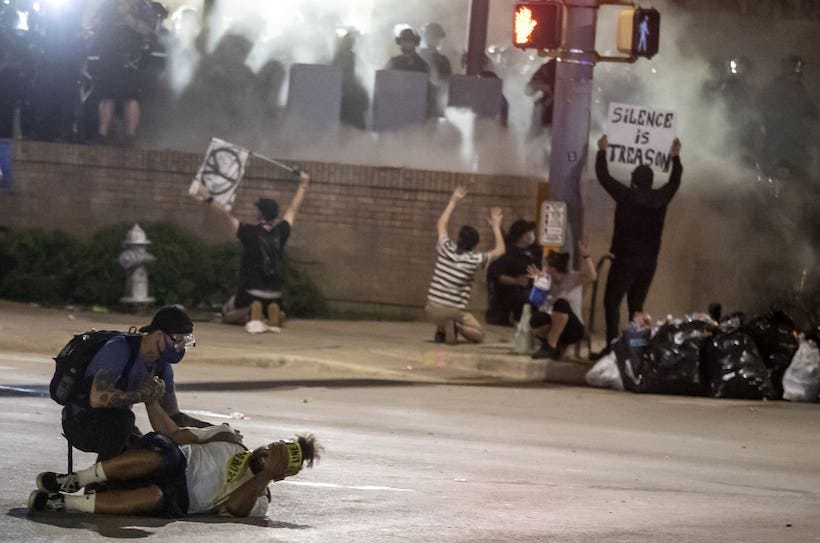
Tyree Talley lies in front of the Austin Police Department headquarters, after being shot by police officers with less-lethal weapons while protesting the death of George Floyd in May 2020. Photo: Ricardo B. Brazziell / Austin American-Statesman / USA TODAY
Austin’s Eighth Street victims’ stories are brutal and gripping, but this tale is far from over. Rodriguez McRobbie also interviewed Travis County District Attorney José Garza, who was elected on a platform of holding police accountable for actions like these. “It is clear that those weapons are deadly weapons under the definition in Texas law,” says Garcia. “It means that it is a weapon that is intended to or is capable of causing death or serious bodily injury.”
Making the argument that less lethal weapons are, indeed, deadly, will be central to the county’s case against these officers. But in a way, the DA is also putting these weapons on trial themselves for perhaps the first time in U.S. history.
Read Part VI of “The People vs. Rubber Bullets” here.
“Over the weekend of May 30 and 31, Austin police fired 700 more bean-bag rounds, this time at citizens protesting racial injustice,” Rodriguez McRobbie writes. “Over those two days, the lives of at least 30 people ages 16 to 43 were permanently altered by projectiles that cracked bones and lodged themselves in bodies.”
“It would’ve been hilarious if it wasn’t horrible,” says Christen Warkoczewski, a 32-year-old Austin native who survived a less-lethal shot that lodged an entire bean-bag round in her cheek. “It’s exactly a ‘The beatings will continue until morale improves’ situation…. [The cops are] like, ’Stop! Don’t protest the ways that we control people! How dare you point out and be upset at the ways in which we are allowed to enact violence upon you!’”
It may not be framed this way by prosecutors in a criminal, Texas court, but Warkoczewski’s assessment — and her experience — is exactly what’s at stake in these cases: Are less-lethal weapons acceptable tools for policing free speech, or have these victims had their First Amendment right violated? Time, and the courts, will tell. In the meantime, read up to get ready.
More soon…
John Patrick Pullen
Founding Editor, Long Lead
PS: “The People vs. Rubber Bullets” isn’t our first explainer spanning multiple decades. Long Shadow: 9/11’s Lingering Questions, a podcast we made with host Garrett Graff, explores the causes and effects of the September 11 terrorist attacks. The podcast recently won a Signal Award for Best History Podcast. Listen and subscribe wherever you get your podcasts, and stay tuned for news about our next production, Long Shadow’s second season, coming this spring.
Read “The People Vs. Rubber Bullets”

Copyright (C) 2022 Long Lead, LLC. All rights reserved.
Want to change how you receive these emails?
You can update your preferences or unsubscribe