


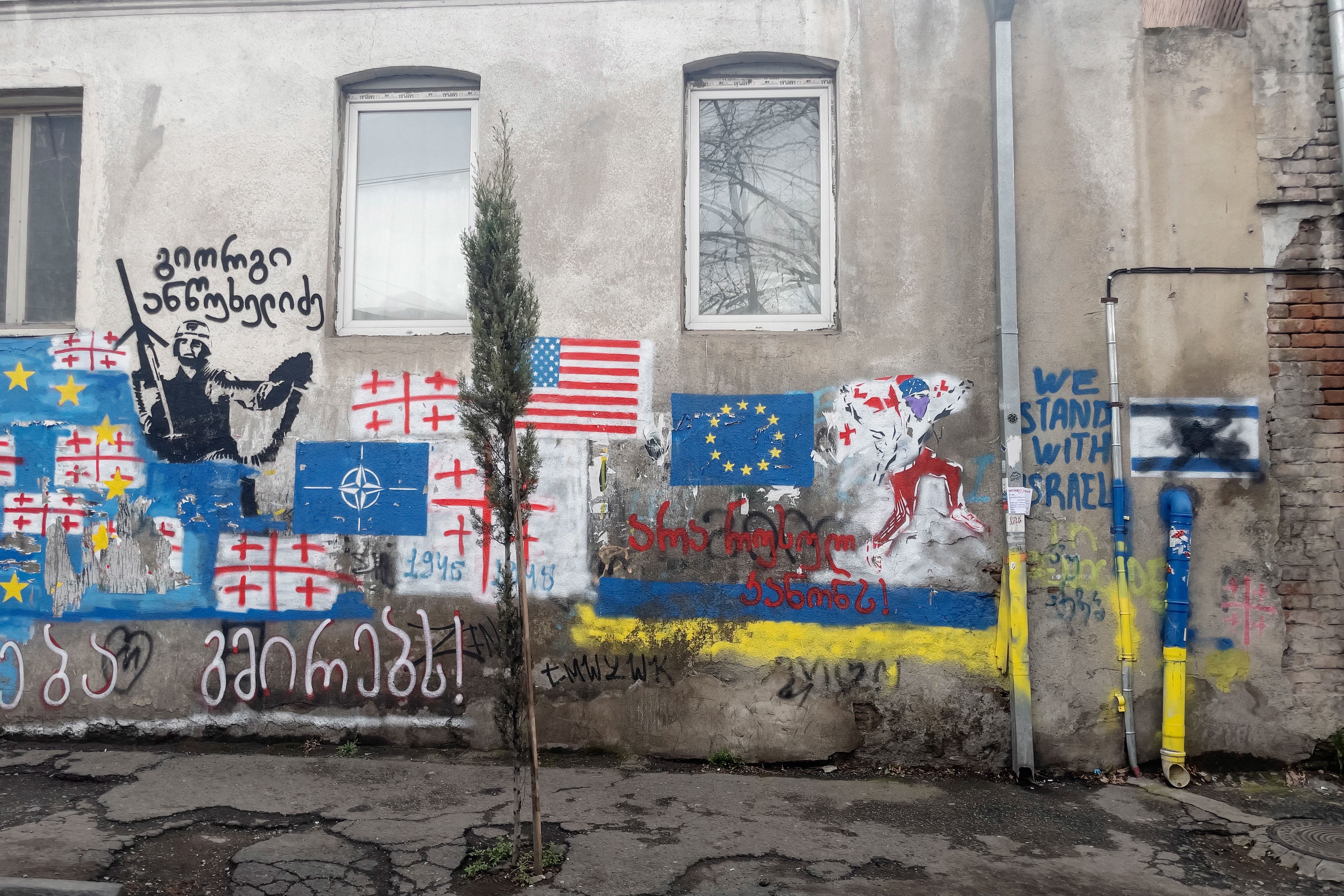
Is this the last summer before the war?
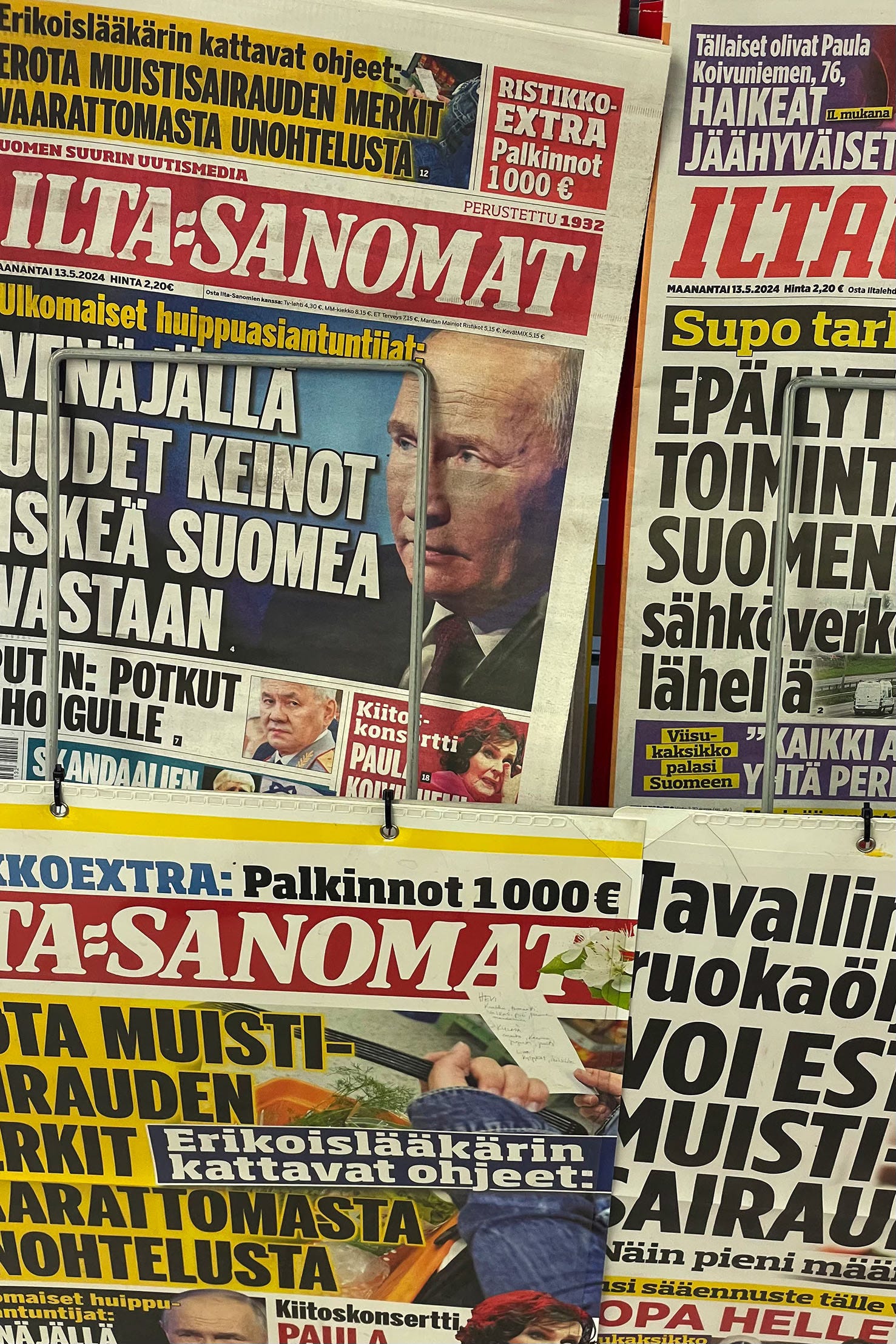
After nearly three years of traveling the countries on Russia’s western border, that’s the question photographer Thomas Dworzak started asking himself. It’s also the question that hangs over every frame of his new photo essay for Long Lead, Border Line War. Ballet dancers rehearsing Swan Lake in Gagauzia. French soldiers running trench warfare drills in Romania. A “patriotic concert” staged by Russian authorities that blasted music across the Narva river toward Estonia. There’s no combat in these images. There’s no rubble. Just a lot of people getting ready for something they hope doesn’t come.
From a Russian mining settlement on Norway’s Arctic Svalbard archipelago to the steppes of eastern Kazakhstan, Border Line War collects images from nearly a dozen countries, spanning more than 4,000 miles. For the accompanying text, Long Lead paired Dworzak with Christian Caryl, a Russia specialist and longtime acquaintance. Dworzak tells me the project kept getting longer as he worked on it. He started with the Baltics, added the Balkans, then the Caucasus, and ultimately decided to follow the line “all the way until it ‘evaporates’ in eastern Kazakhstan.”
Caryl’s text begins with Maria Smorzhevskikh-Smirnova, an Estonian museum director who was sentenced to 10 years in prision in absentia by a Russian court last September. Her crime? As the head of Narva’s main museum, in the Estonian city directly across the river from Russia, she’d hung giant portraits of Putin labeled “war criminal” on the exterior walls of Narva Castle, where they were impossible to miss from the Russian side in Ivangorod. Russia charged her with “disseminating war fakes” and “rehabilitating Nazism.” She’s an Estonian citizen, not a Russian one, but none of it mattered. Her case is meant to send the message that the Kremlin’s reach extends wherever it pleases.


Preparing for ‘War’
A project this sprawling requires expertise that doesn’t exist in most newsrooms anymore. Who do you hire to write a text that covers Romanian election annulments, Moldovan disinformation campaigns, Russian drones in Polish airspace, Georgian political drift, and Kazakh Soviet-era famine memorials, all in the same essay? Who edits it? Who fact-checks it?
For Long Lead, Caryl was the obvious choice. A former Moscow bureau chief for Newsweek, he had met Vladimir Putin twice during his time in the Russian capital. Before that, he held the same title at U.S. News & World Report. He went on to spend nearly seven years as an opinions editor at The Washington Post before leaving at the end of 2023.
Caryl and Dworzak go back 25 years. One of their early assignments together involved a secret location in Chechnya, a fugitive commander, a safe house, and half a week of hiding out eating boiled sheep. The commander never showed up, Dworzak said in a recent interview in Depth Perception. “It’s great that he tells that story,” Caryl tells me. “What we never talk about is the things that went wrong.”
By the time Long Lead brought Caryl onto Border Line War, Dworzak had already shot the entire project. Caryl spent a day clicking through, what he estimates as “hundreds, if not thousands, of images,” then sat down to write text that operated, as he puts it, “in the same world that he was trying to evoke.” He didn’t want to write a running commentary of every image. (“That’s so dull.”) He wanted to do something that matched the mood.
“I’m currently living through a very real war, and seeing how neighbors are preparing or worrying about the prospect of Russian aggression is very reminiscent of how Ukrainians once spoke about the threat.” — Siobhán O’Grady
Long Lead still needed an expert outside editor to work on the text alongside the publisher’s founding editor John Patrick Pullen. Around the same time the project was coming together, The Washington Post’s newsroom was imploding. On February 4, 2026, the paper laid off roughly one-third of the company, including more than 300 people in the newsroom, including its entire Ukraine bureau and Middle East team. Their Ukraine bureau chief, Siobhán O’Grady, had been in Ukraine since Russia’s full-scale invasion in February 2022, reporting from Kyiv while the capital was under siege, and then from wherever the war went next.
Long Lead reached out to her “just days after the mass layoffs at The Washington Post” O’Grady says. She was looking for work while she figured out where she’d land next, and this one let her keep working on Ukraine. Reading Caryl’s draft, she says, was a strange experience.
“It was an interesting exercise for me to read the text and think about Russia’s threat as hypothetical,” O’Grady says. “I’m currently living through a very real war, and seeing how neighbors are preparing or worrying about the prospect of Russian aggression is very reminiscent of how Ukrainians once spoke about the threat, before they experienced full-on war.”
O’Grady brought that perspective into her editing. “I definitely brought a Ukraine-focused perspective to the piece,” she tells me, “finding ways to make clear this does go beyond the hypothetical because there’s a real basis for believing Russia could indeed attack more of its neighbors.”
Her approach to editing was deliberate. She says she read the draft a few times all the way through without making any marks on it, just trying to register how it felt as a piece. Then she went back and worked through it more carefully while asking herself whether a reader with less expertise would still follow the text in parts where Caryl had assumed they might have regional knowledge. This is the kind of editing nobody talks about: It’s not about rewriting or voice-imposition. It’s about a second reader slowly catching the things that the writer is too close to notice.
“I feel like journalism’s been in crisis mode ever since I’ve been a journalist, to be honest,” Caryl tells me. He calls it a Dauerkrise, a German word meaning “permanent crisis” — a contradiction in terms.
The copy editor was Vanessa Larson, also formerly of The Post. Her specific expertise turned out to be unusually well matched to Border Line War. At The Post, she’d helped put together the in-house style guide for Ukrainian officials’ names and place names — the rules for transliterating from Cyrillic, plus the politics of which pronunciation got used where. (Whether you render a Ukrainian city’s name the Ukrainian way or the Russian way is, in 2026, a political statement.) That’s not a generic copy editing skill. This expertise comes after years of editing foreign reporting and learning where the landmines are.
Copy editing foreign reporting, Larson says, means a lot of web searches on names and places and a lot of Google Maps to verify geographic details. (One typical example she offers is,“Is this town actually southwest of the capital city as the story says?”) It also means deciding when to translate a foreign political party’s name into English so readers can follow without losing precision.
“If you’ve done your job well as a copy editor, the reader doesn’t notice,” Larson tells me. “It’s only when you’ve left in typos or mistakes that people notice.”
The fact-checker for Border Line War was Lizzie Johnson, another former Post journalist and a former Ukraine correspondent who also learned she’d been laid off while reporting from a warzone. (Her post about it went viral that day.) Caryl said the piece needed someone to “red team it,” and Johnson did exactly that. O’Grady, who’d worked with her at The Post, explains fact-checking as the kind of granular work where “another reader goes through the entire article word by word, identifying each fact in the story and then researching to make sure everything is correct.” It’s the step that catches mistakes even careful writers and editors miss after enough passes through their own work.
Surviving journalism’s existential crisis
Caryl, O’Grady, and Larson first worked together more than a decade ago at Foreign Policy magazine, in what Larson remembers as a really small newsroom where they all sat within view of one another. Then, separately, all three landed at The Post, where the place was so big, they’d only run into each other in the elevator occasionally. Then The Post blew up, but they were brought back together with this piece.
“It felt like a real homecoming,” Larson says.
I ask Caryl whether he’s worried about the future of the kind of work Border Line War represents: multi-person, multi-year, expensive investigative projects that used to get funded by institutions. He tells me he is definitely worried about it — but he also says he’s been worrying about it since 1997, when he became a foreign correspondent and traditional journalism was already in crisis.
“I feel like journalism’s been in crisis mode ever since I’ve been a journalist, to be honest,” Caryl tells me. He calls it a Dauerkrise, a German word meaning “permanent crisis” — a contradiction in terms.
That’s the condition journalists are under every day while doing their work. Border Line War is what happens when people who’ve been toilinginside that crisis for entire careers decide to tell the story anyway. Dworzak spent years photographing it. Caryl wrote it. O’Grady edited it from Kyiv, where the war isn’t hypothetical. Larson copy-edited it and Johnson fact-checked it — weeks after being fired from the job she’d been doing in a warzone.
