


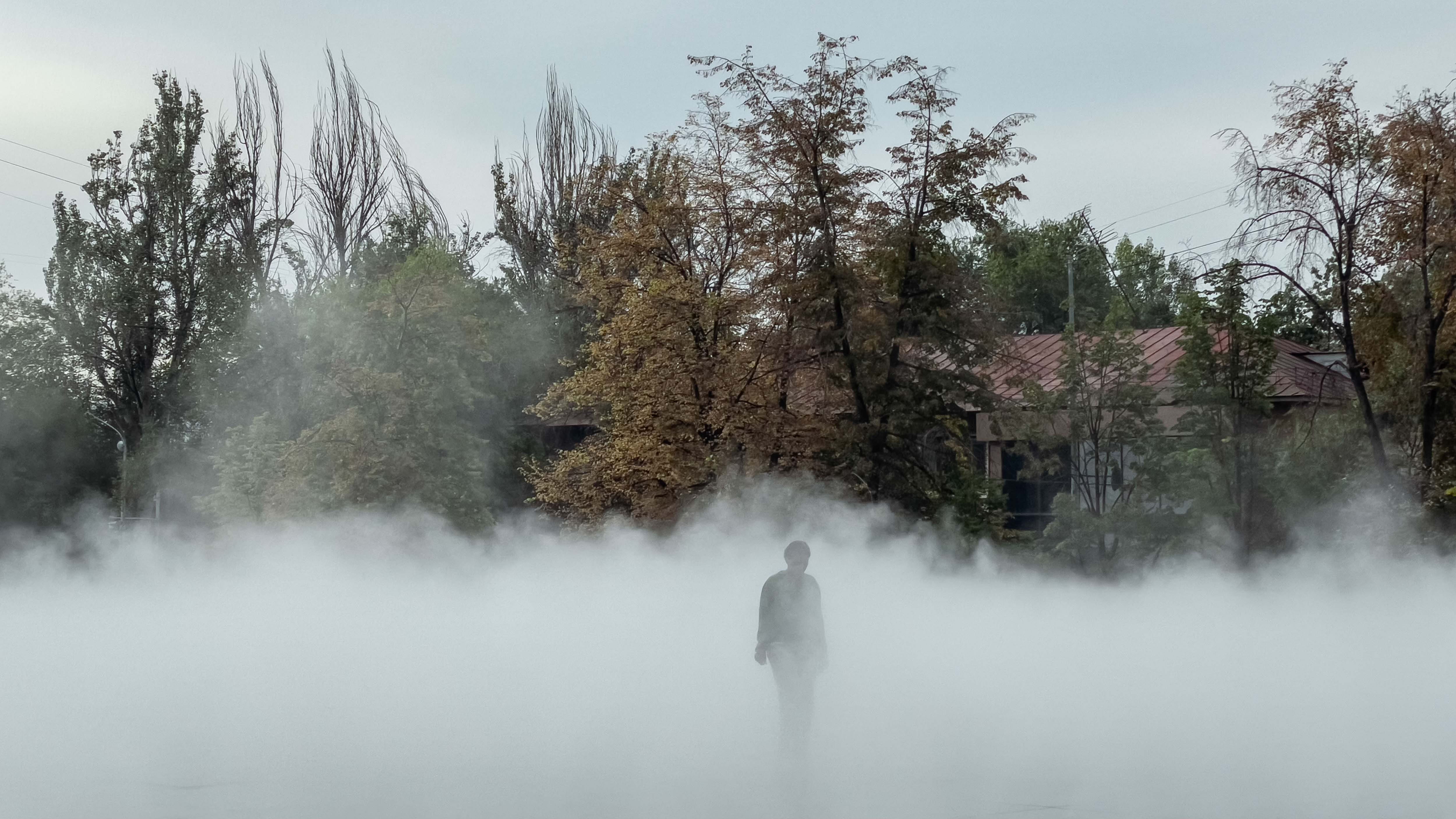
Thomas Dworzak knows a war when he sees one. Growing up just six kilometers from Soviet territory in a small, Bavarian town was a defining element in his life. “There was a lot of fear of war, an invasion — the Russians coming,” the renowned, German conflict photographer tells Parker Molloy in tomorrow’s issue of Depth Perception. “It was the end of the world.”
These days, the Iron Curtain that cast such a shadow on his childhood has moved about 300 miles to the east, the Magnum Photos member notes. “But it’s coming up in a similar way.”
Border Line War, the latest collaboration between Long Lead and Magnum Photos, features Dworzak’s photography and harkens back to the dread of his Cold War youth and to where his career begin in the 1990s: the Caucasus region of Eastern Europe and Western Asia. It’s a photo-first feature that documents how for years Russia’s neighbors along its 4,750-mile border from Norway to Kazakhstan have held a tenuous line with the world’s largest country.
Dworzak began traveling these borderlands in 2023, looking for a different angle from which to view Russia’s war in Ukraine. Along the way he captured images of protests, performances, museums, and military trainings, all spurred to action by a ghost of an empire that insists it has no boundaries.


Border Line War reunites Dworzak with Christian Caryl, a fellow journalist he originally met in Moscow in the early 2000s. The first time the two partnered an assignment, they were to meet a fugitive Chechen commander in a secret location in Chechnya, Dworzak recalls. “All very cloak and dagger,” he says. “We ended up spending half a week hidden in a safe house, watching Soviet TV comedies, eating boiled sheep, and the commander never materialized.”
A former international opinions editor at The Washington Post, Caryl remembers crossing paths again with Dworzak again, years later, in Afghanistan where the Paris-based photographer had discovered an incredible hoard of images in an illicit photography studio. The cache eventually became Dworzak’s first book, Taliban, a collection of found (and garishly retouched) studio portraits of the militant fundamentalists who have oppressively ruled that country.
Accompanied by expert analysis from Caryl, currently a columnist with Foreign Policy, Border Line War is a travelogue and historical record that shows how countries from the Arctic, through the Baltics, and down into the Caucasus have pushed back against the menace next door.
“Europe has been working hard to shore up its borders against the possibility of Russian aggression,” Caryl writes. “But ‘drone walls,’ high-tech border installations, and troop reinforcements won’t suffice on their own when the foe can reach deep into the hearts of the nations trying to shelter behind the lines.”
“‘Drone walls,’ high-tech border installations, and troop reinforcements won’t suffice on their own when the foe can reach deep into the hearts of the nations trying to shelter behind the lines.” — Border Line War
Border Line War is a reunion of sorts for Caryl, too, who is backed by former Washington Post journalists Siobhán O’Grady (the piece’s editor), Lizzie Johnson (who handled its fact checking), and Vanessa Larson (its copyeditor), all recently departed from the storied newspaper.
Still stationed in the Ukrainian war zone where they were at the time of their recent Post layoffs, O’Grady and Johnson brought to the piece a first-hand understanding of what it’s like when the cold wind of Russian influence blows across this new Iron Curtain. At times they communicated with the Long Lead team via satellite internet and battery power, because the war in Ukraine had knocked out their power.
Long Lead is proud to have assembled this team of expert, independent, international journalists, all necessary to produce vital reporting in this moment of peak global anxiety. There may be hundreds of fewer Washington Post journalists than there were two months ago, but there’s more independent ones than ever — and Long Lead is here to support them.
Honor their efforts and expertise by reading Border Line War for free, today.
So long for now,
John Patrick Pullen
Founding Editor, Long Lead